.png)
The spa demystified
.jpg)
Détecto has created a practical guide to help you understand the terminology for the various parts and components of a spa, as well as the common problems and damage that may occur.
.png)
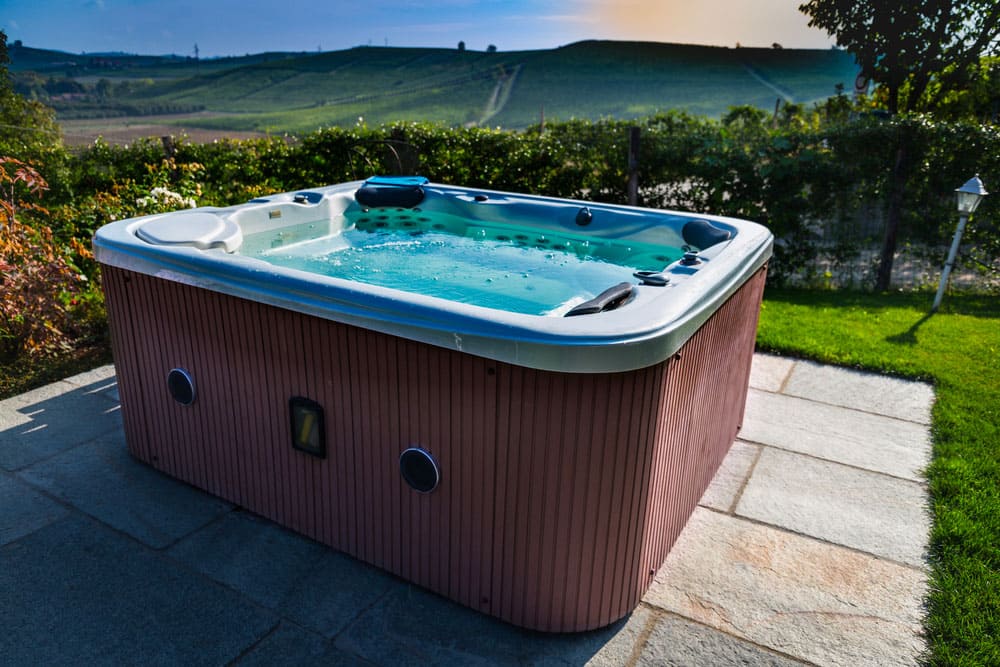
The short history of spas
This type of bath appeared in 1956, invented in a pragmatic way by Candido Jacuzzi, an American of Italian origin. He ran a manufacturer of aircraft propellers and hydraulic pumps and needed a device for hydrotherapy treatments.
This served as the starting point for the marketing of these new “hot tubs” beginning in 1968. The name “Jacuzzi” was registered as a trademark and is often used as a common name.
Spas, Quebec and guarantees
Over the past twenty years, the use of the spa has become much more democratized and has become very popular in Quebec. However, it should be remembered that originally, the spa was not necessarily designed to be used in northern climates, such as here in Quebec.
It is therefore not surprising that most spa manufacturer warranties exclude freezing as a reason to claim damage covered by this warranty. General warranties mainly cover key parts such as pumps and water heaters for 5 years, and the shell is covered against manufacturing defects for sometimes twenty years, but these defects are extremely rare. We can therefore say that the warranty is limited and difficult to apply in most cases, especially when the spa is in operation in winter.
Fortunately, apart from the shell, everything is repairable and the lifespan of a hot tub is estimated at around 15 years, with some maintenance and/or repairs to certain components!
General components of hot tubs
*See the image above for a visual reference for each of the parts.
1.Filters
Filters require regular maintenance to reduce strain on the pumps. While poor maintenance rarely causes damage, it can happen.
2. Cascade
The waterfall is mainly a decorative feature and rarely causes major problems. Over time, minor leaks can develop if certain seals wear out, but these issues are generally easy to fix when caught early.
3. Headrest
Headrests are comfort features that are constantly exposed to water and chemicals. Over time, they may fade or deteriorate, but they are usually simple and inexpensive to replace.
4. Jets
The number of jets varies depending on the spa’s category and price range. If water freezes inside the shell during winter, the pressure from the ice can damage the jets. In most cases, however, freezing causes plumbing to crack first, which allows the shell to drain before the water fully solidifies. As a result, the jets themselves are rarely damaged directly.
5. Shell/tank
The shell, often simply called the spa shell, is the most critical component of a spa. It is usually made of polymer materials and is nearly impossible to repair properly if it is seriously damaged. Fortunately, this kind of damage is very rare: freezing alone is usually not enough to cause it, and it generally takes a major impact to damage the shell beyond repair.
6. Diverter valve
The diverter valve directs water to the spa’s various circuits. Although it is a durable component, it can wear over time or develop minor leaks if it is used frequently. Fortunately, these issues are usually easy to fix when detected early.
7. The control panel
The control panel is the interface located on the top edge of the spa. It is used to start the pumps and adjust the water temperature. Although it is an electronic component, it is designed to withstand the elements and rarely causes major problems.
8. Plumbing/pipework
A spa’s plumbing consists of a network of PVC pipes connecting the jets, filters, and circulation components. If the spa is not used during the winter, it is essential to drain all the pipes thoroughly and protect the spa from any water intrusion.
Even a small amount of residual water can cause significant damage. The plumbing is often embedded in sprayed urethane foam insulation, which makes leaks or breaks difficult to locate; if freezing occurs, large sections of the plumbing may need to be replaced.
9. Drain
The drain allows water to be emptied from the spa during maintenance or winterization. Although simple in design, it must be closed properly after use to prevent water loss.
10. Frame/Cabinet
The frame and cabinet make up the spa’s outer structure. They support the shell and protect the internal components from the elements. Over time, exposure to moisture, sunlight, and temperature changes can cause these materials to deteriorate.
11. Control box
The control box is located beneath the spa. It houses the circuit board, fuses, and main electrical components, making it the true “brain” of the spa. Sensors continuously send it information so it can regulate the temperature and protect the system.
In the event of overheating, freezing, or low water levels, the control box can automatically shut the spa down to prevent damage. However, during winter, a prolonged shutdown can lead to major damage to the pumps, heater, or plumbing if the water freezes.
Fortunately, since these components do not contain water, the control box itself is rarely damaged during a freezing event.
12.Water Heater/Heater
The heater is one of the spa’s biggest energy consumers, and its lifespan is often affected by external factors such as electrical surges. When electrical failures occur, repairs can sometimes place significant strain on the heater and shorten its service life; in many cases, a worn heater begins failing after only 4 to 5 years and sends a shutdown signal to the control box. As long as freezing is not present, this is usually manageable.
However, if the water begins to freeze, a spa with a failed heater will continue circulating increasingly cold water, forcing the pumps to work harder and potentially reducing their lifespan. Older heaters can also suffer from dried or deteriorated wiring, which may lead to a short circuit and shut the spa down
13. Air Blower/blower
The air blower pushes air into the jets to create bubbles and enhance the massage effect. Unlike the pump, it does not circulate water; it works only with air. Over time, humidity and normal wear can affect its performance, but proper maintenance generally helps ensure a long service life.
14. Massage pumps
Massage pumps are often installed in pairs to power the massage function, and some spas also include a third pump dedicated exclusively to water circulation, which helps simplify water maintenance. As mentioned earlier, pumps that continue operating while water begins to freeze can become prematurely worn and often need to be replaced after a freezing event.
They are also located at the lowest point in the plumbing system, so water can sometimes remain trapped in them when the spa shuts down. If freezing occurs while water is still present in the pumps, the resulting damage is usually irreversible.
15. Ozonator
The ozonator is a supplementary disinfection system that helps maintain spa water quality. It injects ozone into the water to reduce bacteria and contaminants, which can also lessen the need for chemical treatments.
16. Valve
The valve controls or directs the circulation of water inside the spa. It is used during maintenance, draining, or to isolate certain components of the system.
17. Electrical box
Quebec electrical standards require a dedicated GFCI breaker for spas, known in French as a DDFT. This breaker is usually located outside the house, near the spa. Its role is to protect spa users from electric shock by detecting leakage current and cutting power when necessary. It is not unusual for this type of breaker to fail over time.
Fortunately, when it becomes defective, it typically remains in a safe closed state and prevents current from passing, which protects bathers. In winter, however, that shutdown can contribute to damage in other spa components if the water is allowed to freeze.
* Note that except for the shell, everything is repairable in a spa!
To Remember
A spa break in winter is not necessarily a disaster.
If the interruption is recent (less than 2 to 3 days), several components can still be protected. Call in an emergency wintering service as soon as possible to limit the impacts.
.jpg)
At Détecto, our expertise in pool inspection has been built over the past 30 years. With more than 15,000 pools inspected, our team brings a sharp eye and an accurate assessment of your pool’s true condition.
Our neutrality is what truly sets us apart. We do not sell pools or equipment, which allows us to provide objective evaluations and tailored recommendations — with no conflict of interest.
Whatever your situation, do not hesitate to contact us. We will be happy to help you better understand your pool and make informed decisions.

.svg)