.png)
The inground pool demystified
.jpg)
Détecto has designed a practical guide for you to know everything about the terminology associated with the different parts and parts of a inground pool and to better understand the frequent problems and breakages that can occur.
Did you know that?
There are two main families of inground pools that are installed in Quebec.
The vinyl liner pool: is composed of modular walls made of galvanized steel or resin, installed in the excavation before the concrete base is poured.
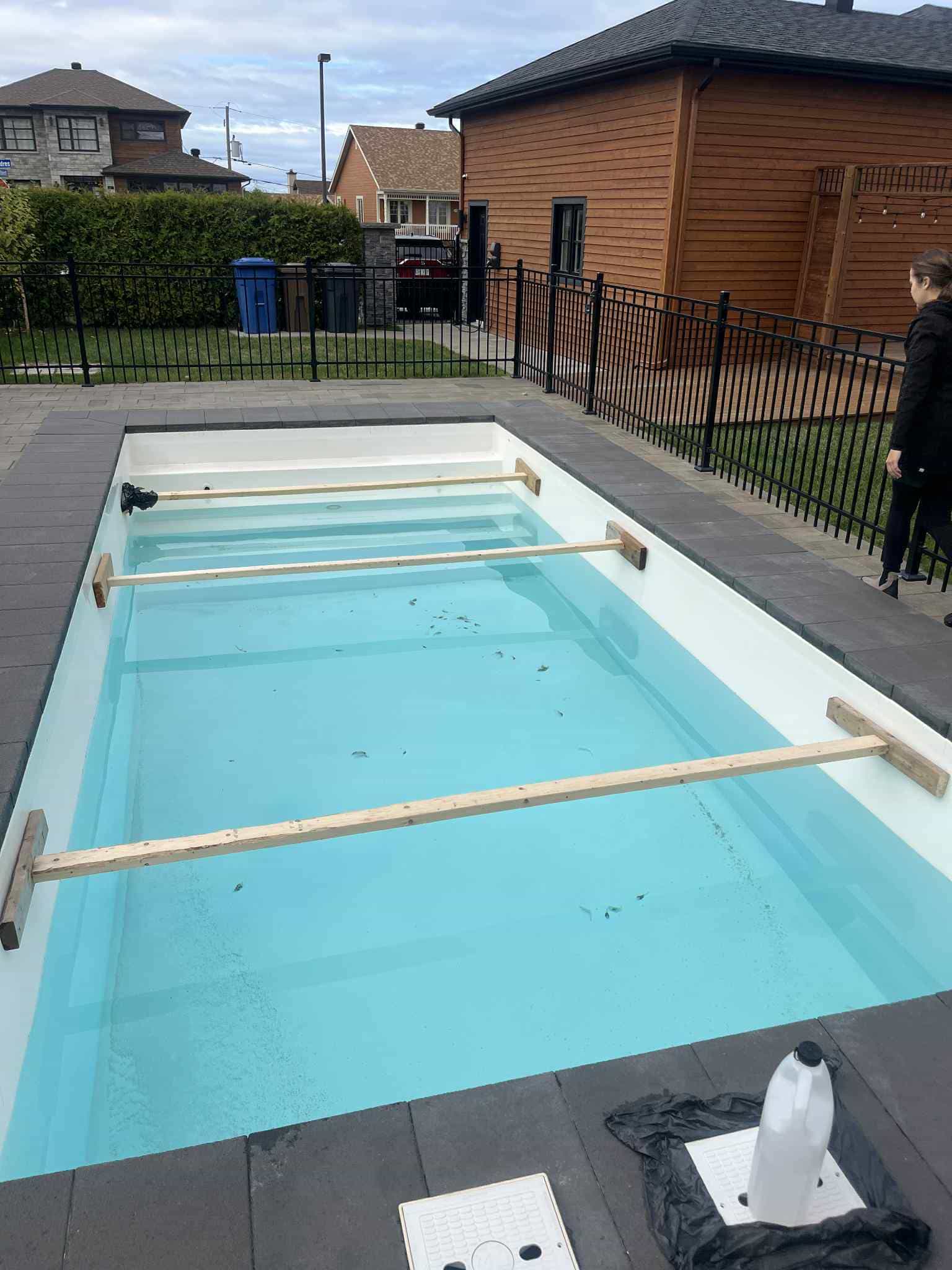
A linerless pool: is self-supporting and takes the form of a rigid shell, either a one-piece fiberglass shell or concrete

General components of an inground pool
Let’s begin by demystifying the vinyl liner pool, then we’ll look at the one-piece fiberglass pool later in this article.
The vinyl liner pool
1. Wall and floor
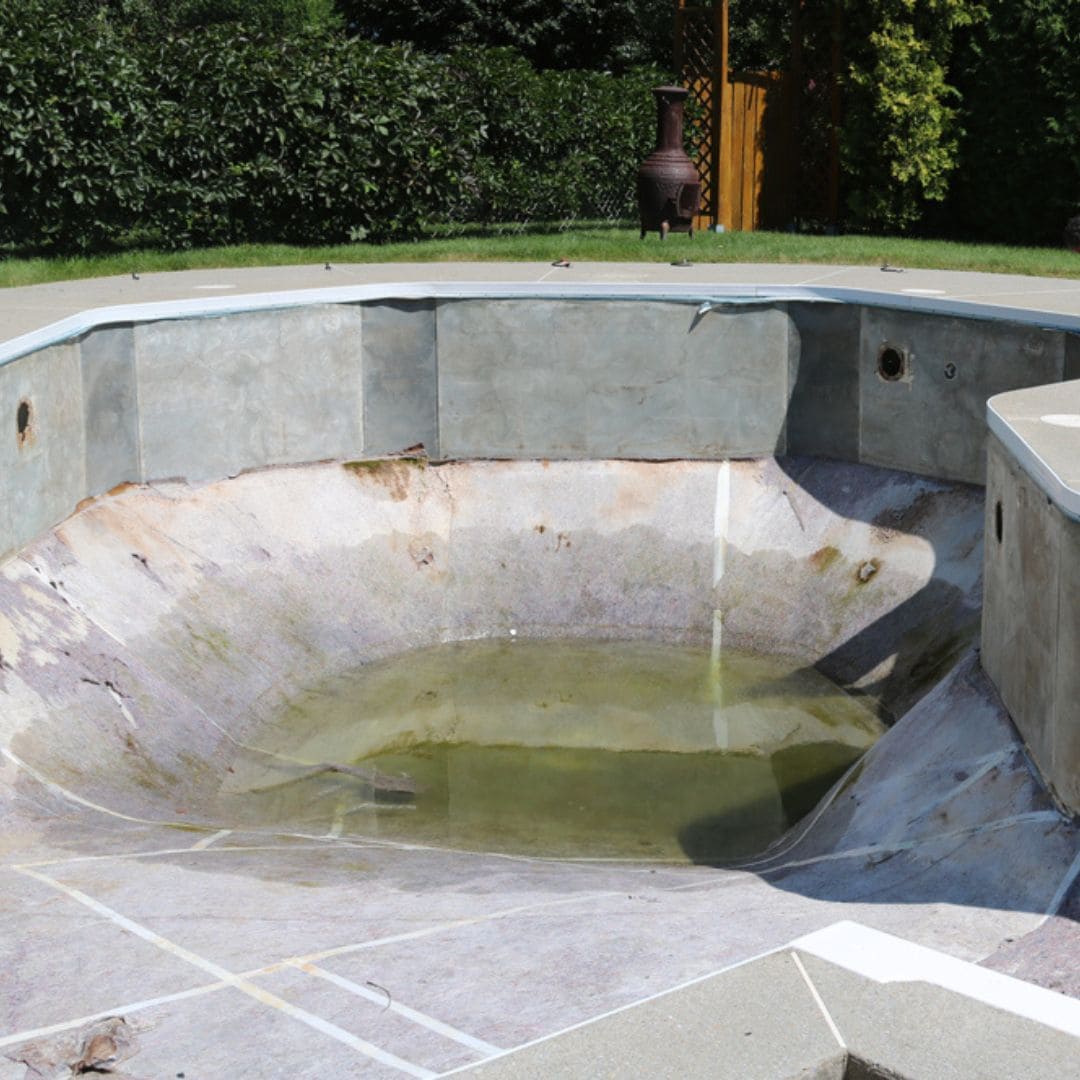
The wall is often made of steel or resin, while the floor may be made of sand or concrete. Since both are located beneath the liner, they are not visible. It is important to identify them properly, as repair costs can vary significantly depending on the material involved. Thanks to their experience and on-site evaluation, our experts are able to determine which material they are dealing with.
Note: Damage to these components is rare, except in the case of resin walls, which can crack under pressure from frost. *
The canvas is made of vinyl and has a limited lifespan. It dries in the sun and is fragile during the winter. It is retained on the pool wall, or on the sidewalk, with a border that is often made of PVC. It is a material that dries and breaks over time and some models have become obsolete.
Our experts can recognize the signs of wear and tear and those related to an accidental event. For each inspection we assess the age of the canvas, and of the pool, and provide an average depreciation according to the estimated lifespan.
Fortunately, methods exist to replace the canvases even on very old pools. The estimates we present in our reports use effective solutions that are well known to pool builders and that limit work to disaster areas.
*Note: it is not uncommon for the mass of ice to tear the canvas during the thaw and these breakages can easily be confused with those caused by wear and tear.
3. Skimmer
Many use the English term “skimmer” to talk about it, it is the plastic mouth that collects surface water and floating debris so that they can be treated by the filtration system.
4. Return jets
These are the plastic nozzles (there are 2 or 3 of them usually) that are located below the normal water level and return filtered water back into the pool. Before the first frost, it is imperative to plug the water returns because they should not contain water during the winter. If water enters the filtration system, it may swell during the winter and thus break your pool.
5. Main drain
Very old pools did not have them but, today, all pools have a drain that draws water and debris from the bottom into the filtration system. This makes it much easier to maintain the pool and it is a room that is never affected by frost because it is located below the frost level in Quebec.
6. Filtration system (filter, pump and plumbing)
PVC pipes connect the skimmer, return jets and the main drain to the pump and filter. This is usually located in a shed near the pool. The pipes are buried underground and completely drained of water in winter to avoid freezing, which can damage the pool.
The pump circulates water through the PVC pipes. The filter collects the debris to purify the water. And the water heater, heats the water!
These 3 elements of the filtration system must also be properly prepared for winter. Many people call on a pool technician to close and open their in-ground pool.
7. Pool lights
Some pools have lights, small or large, to keep in winter (or not)! Each has its own particularities, for example, Lumi-O lights, for example, must be resealed each time the canvas is changed.
8. Fiberglass step
Most inground pools have a white fiberglass step located on the shallow side. This step has a tendency to split on the sides after harsh winters and unfortunately these breakages cannot be repaired and also require the canvas to be changed; the budgets are substantial.
9. Removable inground pool ladder
Even if several pools have a permanent step, it is not uncommon for a removable ladder to also be installed on the deep side. The removable ladder should not be left in the pool during the winter. Unfortunately, this oversight is frequent and most of the time causes the loss of the liner; the ice pushes strongly against the ladder and its feet then perforate the canvas.
10. Sidewalk
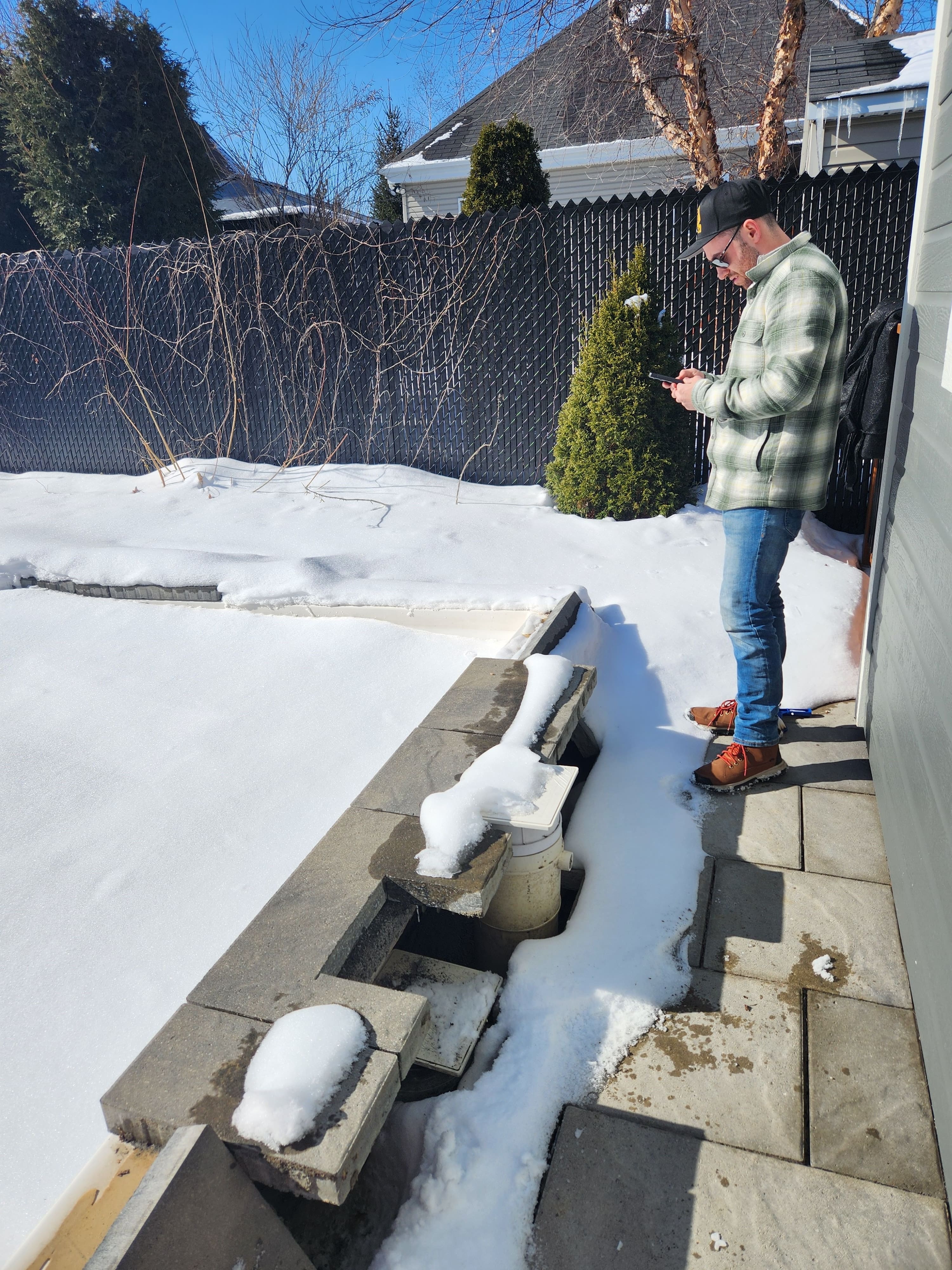
You should know that for the majority of pools with a liner, the concrete pavement plays a very specific role and preserves the pool in the long term. In fact, the concrete sidewalk is used to prevent rainwater and water from melting snow from ending up near the walls. Water adds weight to the backfill material pressed against the walls and helps move the walls inward. Using a concrete sidewalk that is at least 36” long has been the rule of the art for over 30 years. However, it is to be expected that over time and the multiple freeze/thaw cycles of Quebec winters, concrete will tend to crack and break up — this is inevitable.
The concrete pavement must be maintained carefully and must sometimes be changed during the life of the pool, however, it should not be replaced by wood, paving stones (unless you put it over the concrete) or drill holes in it to install plantings. The concrete pavement in the majority of pools is functional, not only aesthetic, and it helps maintain the pool; it should not be overlooked.
Components of a vinyl liner pool
The pool without a liner
The vinyl liner pool or concrete pool is designed in one piece and cannot be repaired in a modular way, as one could do for a pool with wall panels and a canvas. Its greatest quality is its durability, but its biggest flaw is its sensitivity to groundwater movements.
If certain human maneuvers are carried out, or if particular climatic conditions are present, the basin can emerge from the ground irreversibly, sometimes leading to its total loss. The vinyl liner pool, which are not damaged, can be replaced in the ground, but the concrete basins will have to be destroyed and rebuilt with the consequence. to impose a major project on owners and cash outflows of the order of $60,000 to $100,000. It is sometimes a responsibility to be shared with the pool technician who closes or maintains the pool; you have to know how to ask the right questions and make the appropriate observations to establish it.
.jpg)
At Détecto, our expertise in pool inspection has been built over the past 30 years. With more than 15,000 pools inspected, our team brings a sharp eye and an accurate assessment of your pool’s true condition.
Our neutrality is what truly sets us apart. We do not sell pools or equipment, which allows us to provide objective evaluations and tailored recommendations — with no conflict of interest.
Whatever your situation, do not hesitate to contact us. We will be happy to help you better understand your pool and make informed decisions.

.svg)